
· Dosage Protocol
Retatrutide Dosage Protocol
Written by PeptexLab Editorial Team · Research use only
Retatrutide is an investigational triple-agonist peptide targeting GIP, GLP-1, and glucagon receptors. Educational protocols use titrated weekly subcutaneous injections in the 2–12 mg range, with slow uptitration to manage tolerability. For research and educational use only.
Quick Start
The short version
If you only read one thing, read this. The four cards below are the whole protocol in plain English — the sections that follow just add the detail.
What is it
Retatrutide
Retatrutide is an investigational triple-agonist peptide targeting GIP, GLP-1, and glucagon receptors.
Typical dose
2–12 mg subcutaneous, once weekly
Start low, work up. See the phase table for a week-by-week ramp.
How often
Once weekly
Same time each day is easiest to remember and keeps levels steady.
Storage
2–8 °C, protect from light
Keep the mixed vial in the fridge. Powder can sit at room temp until you mix it.
Dosage Chart
Handling
Dosing & Reconstitution Guide
Add 2.0 mL bacteriostatic water slowly to the 10 mg vial. Swirl gently until fully dissolved into a clear solution. At 5 mg/mL, 2 mg equals 40 units (0.4 mL) on a U-100 insulin syringe.
Subcutaneous Protocol
Frequency: once weekly subcutaneously. Retatrutide has a long circulating half-life supporting weekly dosing. Slow uptitration reduces GI adverse effects commonly reported with incretin agonists.
Supplies Needed
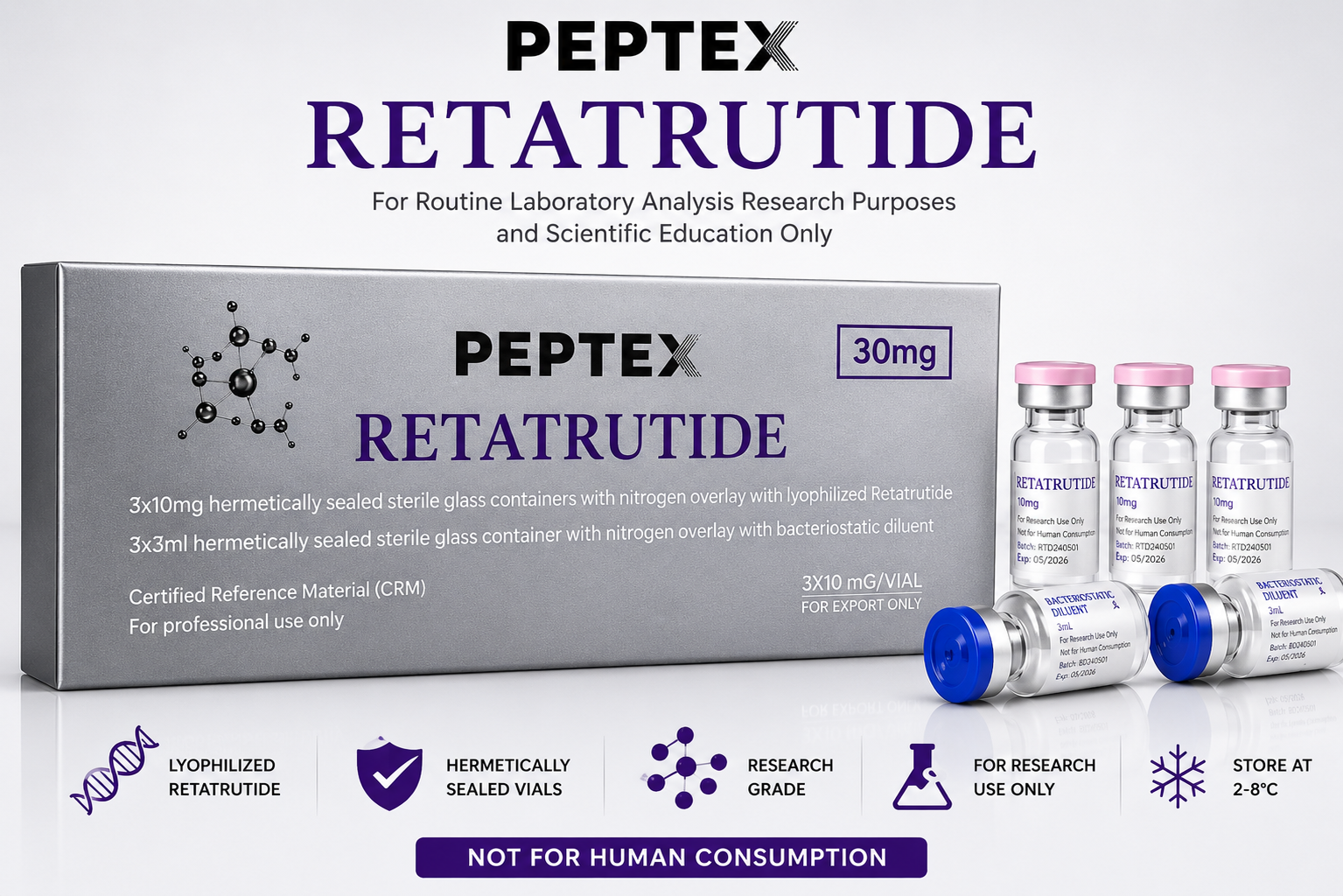
Retatrutide 10 mg vial
Lyophilized peptide. Each vial supports several weekly administrations at initiation doses.
Bacteriostatic water
2.0 mL per 10 mg vial for a 5 mg/mL working concentration.
U-100 insulin syringes
Rotate a fresh sterile syringe for every administration.
Alcohol swabs
One for the vial septum, one for the injection site each administration.
Plain-English Glossary
Jargon, translated
A quick decoder for the terms you'll see across this page.
- Subcutaneous (subQ)
- Injected into the fatty layer just under the skin — not into muscle or vein. Easier and less painful than an IM shot.
- Reconstitution
- Mixing a dry powder with liquid (bacteriostatic water) to turn it into an injectable solution.
- Lyophilized
- Freeze-dried. The peptide arrives as a dry powder so it stays stable during shipping.
- Bacteriostatic water
- Sterile water with a tiny amount of preservative that prevents bacteria growth — used to mix peptides.
- Units (on an insulin syringe)
- The small tick marks on a U-100 syringe. 100 units = 1 mL. Most doses are just a few units.
- Half-life
- How long it takes your body to clear half of a dose. Guides how often you inject.
- Titration
- Starting low and slowly increasing the dose so your body can adjust.
Protocol Overview
- Goal: Support metabolic research on multi-receptor incretin signaling.
- Schedule: Once weekly subcutaneous injection, same day each week.
- Dose range: 2–12 mg per administration, titrated slowly.
- Storage: 2–8 °C after reconstitution, protected from light.
Dosing Protocol
- Start: 2 mg once weekly for four weeks to assess tolerance.
- Titrate in ~2 mg increments every 4 weeks if tolerated.
- Timing: Consistent day of the week improves protocol adherence.
- Cycle length: Reference protocols run 12–24 weeks, then reassess.
Storage Instructions
- Lyophilized product: room temperature, sealed and protected from light. Refrigeration acceptable.
- Reconstituted product: 2–8 °C (35.6–46.4 °F) refrigerated, protected from light.
- Do not freeze reconstituted solution.
- Allow to reach room temperature before administration to reduce injection-site response.
Important Notes
- Use a new sterile syringe for each administration.
- Rotate injection sites (abdomen, thighs, upper arms) to reduce local irritation.
- Discard the vial if the solution becomes cloudy, discolored, or shows particulates.
- Document daily dose and site rotation for consistency.
- GI effects (nausea, early satiety) are dose-dependent — slow titration is the primary mitigation.
Mechanism
How This Works
Retatrutide is a triple agonist at the GIP, GLP-1, and glucagon receptors. GIP and GLP-1 activity supports glucose-dependent insulin release and satiety, while glucagon activity increases energy expenditure — a combination associated with substantial weight reduction in published trials.
The long fatty-acid side chain enables albumin binding and once-weekly pharmacokinetics.
Potential Benefits & Side Effects
- Substantial reductions in body weight reported in phase-2 trials.
- Improved glycemic parameters in type-2 diabetes research.
- Reduced hepatic steatosis markers in metabolic studies.
- Commonly reported adverse effects: nausea, diarrhea, constipation — usually dose-limited.
- Investigational; long-term safety data still emerging.
Lifestyle Factors
- Prioritize protein intake to preserve lean mass during weight reduction.
- Stay well hydrated to offset GI-related fluid loss.
- Regular resistance training helps preserve muscle during caloric deficit.
- Avoid large high-fat meals near injection day to reduce GI discomfort.
Injection Technique
- 1. Clean the vial septum and injection site with alcohol; allow to dry.
- 2. Draw the target volume slowly to avoid foaming the peptide.
- 3. Pinch a skinfold; insert the needle at 45–90° into subcutaneous tissue.
- 4. Do not aspirate for subcutaneous injections; inject slowly and steadily.
- 5. Rotate sites systematically (abdomen, thighs, upper arms) to avoid lipohypertrophy.
Important note. This content is for educational and research purposes only and does not constitute medical advice, diagnosis, or treatment.
References
- 1
- 2
- 3
Explore more
Browse all PeptexLab protocols
Every PeptexLab reference material has a dedicated dosage protocol page with reconstitution guides, phase schedules, and research references.
View all protocols