
· Dosage Protocol
Glutathione Pen Dosage Protocol
Written by PeptexLab Editorial Team · Research use only
Glutathione is a tripeptide antioxidant (γ-glutamyl-cysteinyl-glycine) studied for oxidative-stress modulation, hepatic support, and skin-related research. Educational protocols use 200–600 mg per administration, 1–3× weekly subcutaneously. For research and educational use only.
Quick Start
The short version
If you only read one thing, read this. The four cards below are the whole protocol in plain English — the sections that follow just add the detail.
What is it
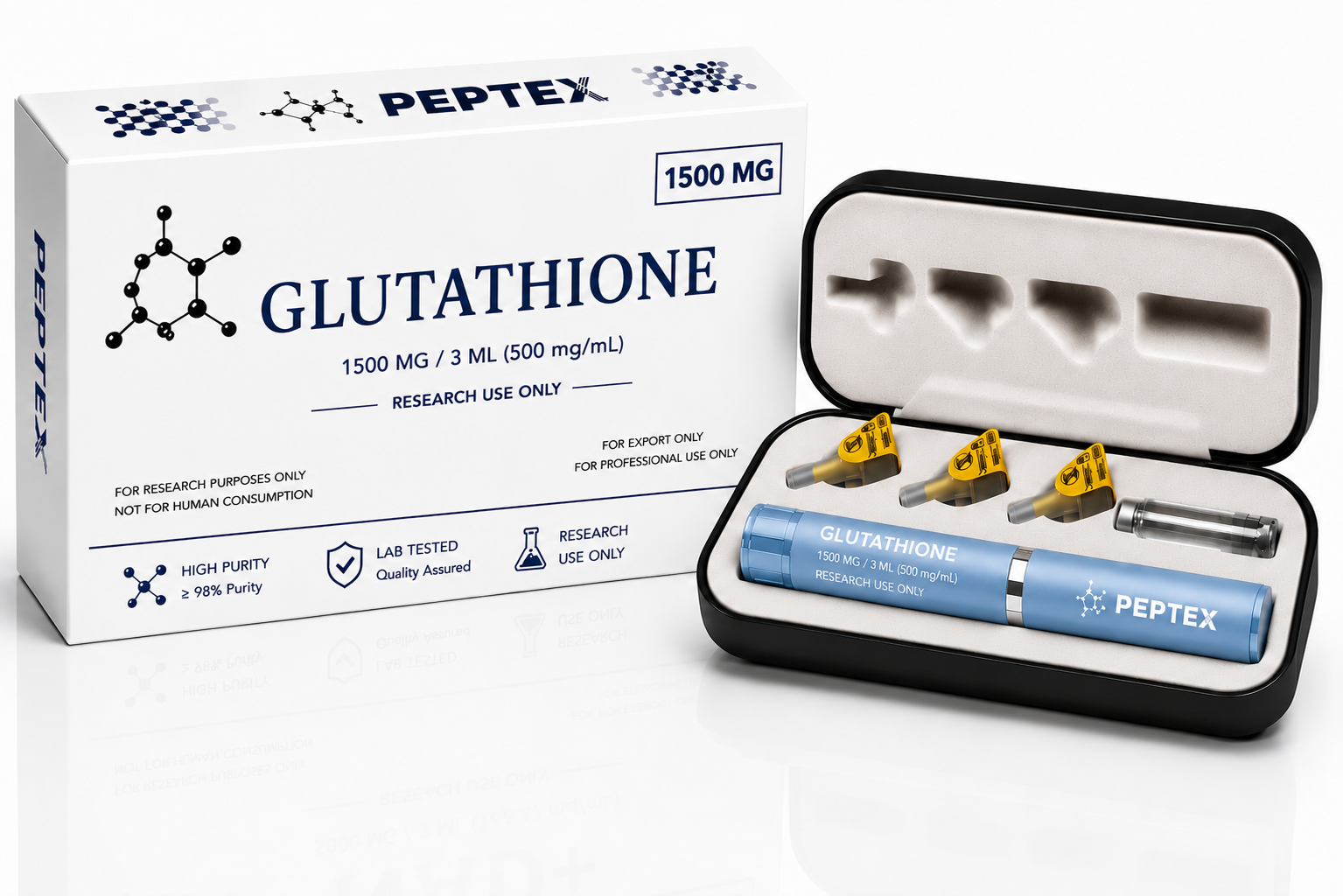
Glutathione Pen
Glutathione is a tripeptide antioxidant (γ-glutamyl-cysteinyl-glycine) studied for oxidative-stress modulation, hepatic support, and skin-related research.
Typical dose
200–600 mg subcutaneous
Start low, work up. See the phase table for a week-by-week ramp.
How often
Once weekly
Same time each day is easiest to remember and keeps levels steady.
Storage
2–8 °C, dark
Keep the mixed vial in the fridge. Powder can sit at room temp until you mix it.
Dosage Chart
Handling
Dosing & Reconstitution Guide
The pen is pre-filled — no reconstitution required. Prime the pen, dial the target mg dose, and inject subcutaneously.
Subcutaneous Protocol
Frequency: 1–3× weekly subcutaneously. Glutathione is unstable in solution — use promptly after dose selection and protect from light.
Supplies Needed
Glutathione 1500 mg pen
Pre-filled multi-dose pen at 500 mg/mL.
Pen needles
Fresh disposable pen needle each administration.
Alcohol swabs
For pen tip and injection site prep.
Refrigeration
Store cold; protect from light.
Plain-English Glossary
Jargon, translated
A quick decoder for the terms you'll see across this page.
- Subcutaneous (subQ)
- Injected into the fatty layer just under the skin — not into muscle or vein. Easier and less painful than an IM shot.
- Reconstitution
- Mixing a dry powder with liquid (bacteriostatic water) to turn it into an injectable solution.
- Lyophilized
- Freeze-dried. The peptide arrives as a dry powder so it stays stable during shipping.
- Bacteriostatic water
- Sterile water with a tiny amount of preservative that prevents bacteria growth — used to mix peptides.
- Units (on an insulin syringe)
- The small tick marks on a U-100 syringe. 100 units = 1 mL. Most doses are just a few units.
- Half-life
- How long it takes your body to clear half of a dose. Guides how often you inject.
- Titration
- Starting low and slowly increasing the dose so your body can adjust.
Protocol Overview
- Goal: Support antioxidant research and hepatic/dermatologic protocols.
- Schedule: 1–3× weekly subcutaneous injection.
- Dose range: 200–600 mg per administration.
- Storage: Refrigerated, strictly light-protected.
Dosing Protocol
- Start: 200 mg twice weekly.
- Target: 400 mg 2–3× weekly.
- Timing: Consistent schedule improves protocol adherence.
- Cycle length: 6–12 weeks in reference protocols.
Storage Instructions
- Lyophilized product: room temperature, sealed and protected from light. Refrigeration acceptable.
- Reconstituted product: 2–8 °C (35.6–46.4 °F) refrigerated, protected from light.
- Do not freeze reconstituted solution.
- Allow to reach room temperature before administration to reduce injection-site response.
- Protect from light rigorously — glutathione is oxidation-sensitive.
Important Notes
- Use a new sterile syringe for each administration.
- Rotate injection sites (abdomen, thighs, upper arms) to reduce local irritation.
- Discard the vial if the solution becomes cloudy, discolored, or shows particulates.
- Document daily dose and site rotation for consistency.
Mechanism
How This Works
Glutathione (GSH) is the primary intracellular antioxidant. It scavenges reactive oxygen species, participates in phase-II hepatic conjugation, and maintains redox balance across the cytosol and mitochondria.
Exogenous glutathione supplementation is studied for its effects on skin pigmentation via inhibition of tyrosinase and shifting melanin synthesis toward pheomelanin.
Potential Benefits & Side Effects
- Reduced markers of oxidative stress in research contexts.
- Reported improvements in skin brightness and pigmentation in dermatologic studies.
- Hepatic support in toxin-exposure research.
- Generally well tolerated; occasional injection-site response.
Lifestyle Factors
- Support endogenous GSH synthesis with adequate protein and cysteine-rich foods.
- Consider NAC as an oral GSH precursor in longer protocols.
- Prioritize sleep and stress management to reduce oxidative load.
- Limit alcohol during hepatic-support protocols.
Injection Technique
- 1. Attach a fresh pen needle and prime.
- 2. Clean the injection site with alcohol.
- 3. Dial the target mg dose.
- 4. Pinch a skinfold; insert at 45–90° subcutaneously.
- 5. Depress fully, hold 5–10 seconds, withdraw.
- 6. Dispose of the needle in a sharps container.
Important note. This content is for educational and research purposes only and does not constitute medical advice, diagnosis, or treatment.
References
- 1
- 2
Explore more
Browse all PeptexLab protocols
Every PeptexLab reference material has a dedicated dosage protocol page with reconstitution guides, phase schedules, and research references.
View all protocols